
There Are No Good Sequels
Slay the Spire 2 is the exact same game as Slay the Spire 1. Complimentary.

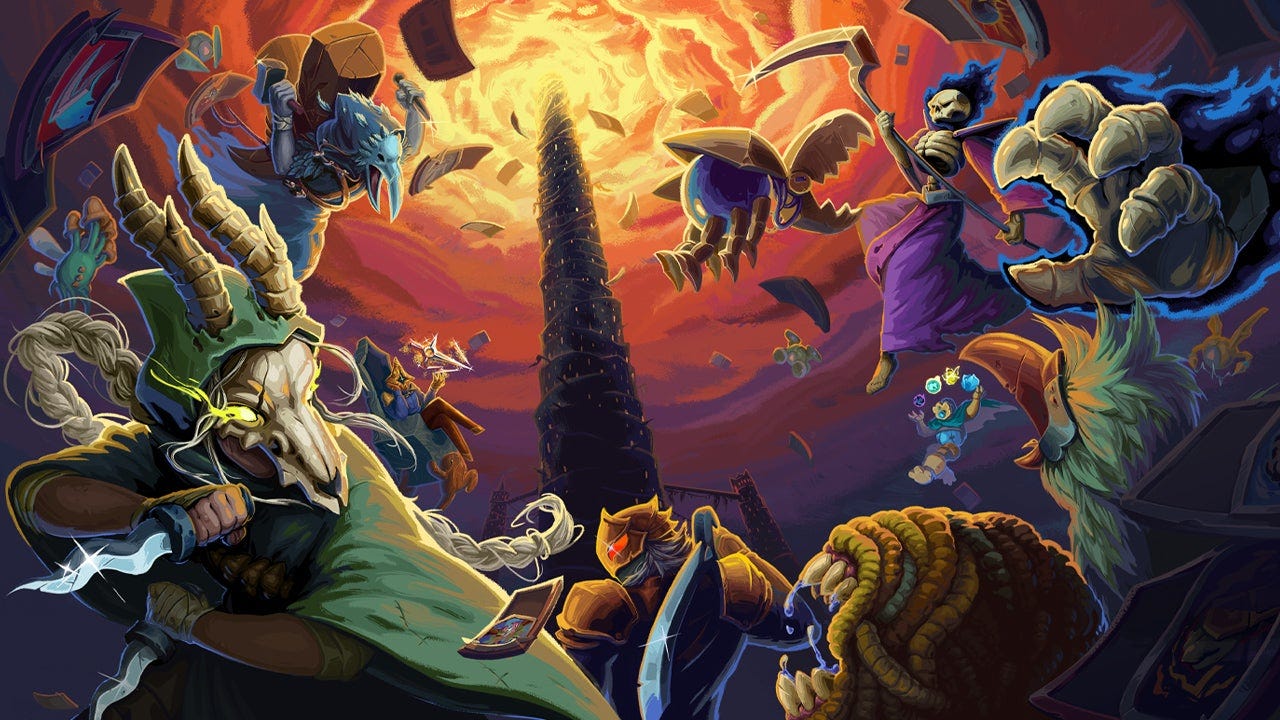
Slay the Spire 2, the sequel to indie developer Mega Crit’s uber-popular deck-building roguelite, Slay the Spire, released into early access a few weeks ago, and it got me thinking about the nature of sequels in general.
A sequel—especially to something that is universally beloved—is the Kobayashi Maru of creative endeavors: it’s the impossible task of sparking the same appeal of the original work while also simultaneously providing something unique. Never has there been a better encapsulation of the term oxymoron than the “fresh sequel.”
In movies, I can count the number of sequels on one hand that are “better” than the original outing (e.g. The Dark Knight, Terminator 2, Godfather Part II, Before Sunset). More often than not, though, the sequel is not only worse…it’s so demonstratively worse that it taints the memory of the original (e.g. literally every Jurassic Park sequel).
Video games tend to fare better when it comes to sequels as retreading familiar gameplay mechanics goes down easier than recycled plot beats and characters. Who cares if the story is the same if the shooting feels smoother and looks better? The evolution usually comes in terms of technical and gameplay improvements—smarter enemies, radder weapons, better graphics, etc. Still, though, I think that few would argue that the Last of Us Part II (a game that is visually superior and mechanically more advanced than its predecessor) is altogether a better game than the OG 2013 release.
With Slay the Spire II, lead developers Anthony Giovannetti and Casey Yano, were faced with the impossible question: how do they improve upon the perfect game? I know I am often guilty of hyperbole on this newsletter, but, yes, Slay the Spire is the perfect video game: it’s tightly designed, addictive, and full of delicious choices. It’s the epitome of the “one more run” rabbit hole. It’s a game I own for multiple platforms and have devoted literally hundreds of hours of my limited time on this mortal plane playing.
Well, Giovannetti and Yano seem to have tackled the impossible task—how do you improve upon the perfect game—by refusing to do it. After playing through the game on early access, my review is that Slay the Spire 2 is fundamentally the exact same game as Slay the Spire with just more stuff in it. This is a good thing.
As Steam user Kreptyne wrote: “they took the game and made it 2-er”
On first launch, I was actually somewhat disappointed by how similar Slay the Spire 2 feels to the original. The music is mostly the same, the visuals and animations, while more polished, aren’t massively upgraded. And, your starter set of playable characters (the Ironclad, the Silent, and the Defect) are unchanged. But, oh dear reader, the game is as addictive ever. After my first run, I was like a former nicotine addict getting a whiff of smoke wafting near the entrance of the bar…it called to me… beckoned me…
Slay the Spire 2 is the first game done again. There are new cards, yes. New enemies. New artifacts and power-ups. But, there’s also all the old stuff too. In fact, I was surprised by what didn’t change. Basic card sets and artifacts remain the same. Aforementioned new cards have been added to tweak play styles and synergies, but the overall approach to each character is stalwart.
Still, though, the changes tweak things just enough to give you that fresh dopamine hit you’re looking for. Everything old is new again. For instance, the Defect—the sort-of-mage, magic spewing robot—has additional orbs with new powers. The Ironclad has new synergies revolving around vulnerability debuffs. And, yes, there are two new playable characters, each with unique mechanics. There’s also a co-op mode that I can’t provide feedback on as I haven’t tried it on the account that I have no friends.
All this to say, when it comes to sequels, Slay the Spire 2 seems to suggest that if you can’t improve upon perfection, you just do perfect again. I think there is an argument to be made about how this is bad for creative advancement—that repetition leads to stagnation, that Slay the Spire 2 should have been bolder…should have taken a bigger swing.
But, that’s an existential problem I’m not ready to engage with just yet. After all, I have just one more run I’d like to get through first…