
We Really Had Everything
"Avengers: Endgame" and a look back at the before times

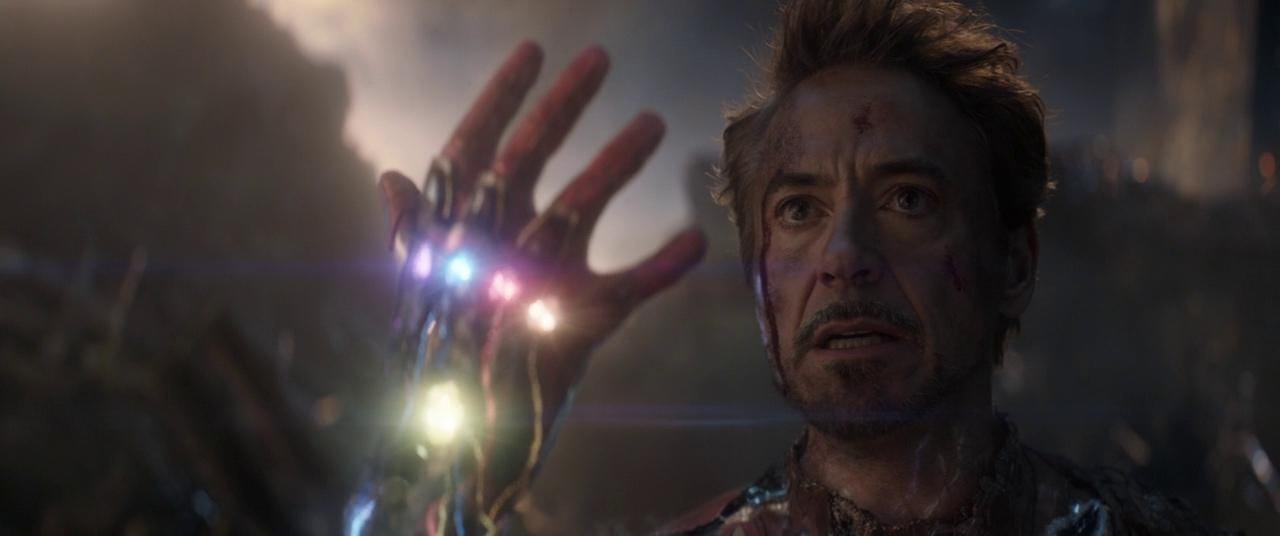
Nostalgia can be a dangerous thing: as humans we have a tendency to compartmentalize the past into only the good bits, conveniently forgetting the bad. History repeats itself because it’s so very easy to blackout the horrors and hold on to the stuff that made us feel good on the inside.
Of course, I’m talking about Avengers: Endgame. Or, more specifically, I’m thinking back to 2019: a time that feels so removed from our present climate—both politically and culturally—that it might as well have been fifty years ago, not under a decade.
Let’s look back, shall we? True, Trump was still president back then too. But, this Trump, as evil and bigoted as he was, felt like an anomaly—a disturbance in the force whose rise to power was, as Dr. Strange might say, a 1 in 14 million scenario. It was an aberration: inexplicable, and non-repeatable. A return to normalcy still seemed possible.
This was pre-COVID: the life changing global pandemic had not yet made us both physically sick and mentally unstable. If Trump was the harbinger for a global shift to stupidity and evil, COVID was the steamroller: the thing that would flatten so many peoples’ brains, profoundly challenging the very nature of society, exposing not only our collective selfishness, but also our inability to embrace meaningful change.
This was pre the murder of George Floyd. Racism and inequality have always been cudgels by those in power, but this particular horrific injustice exposed it, making hidden wounds visible once again; raw and public. In response to the outcry and pain, the evil people, predictably, did not self reflect, but, rather, dug in their heels and clenched their fists even harder.
Through the rose-tinted lens of nostalgia, April 2019 was an American Années folles, and Avengers: Endgame was the crest of the wave.
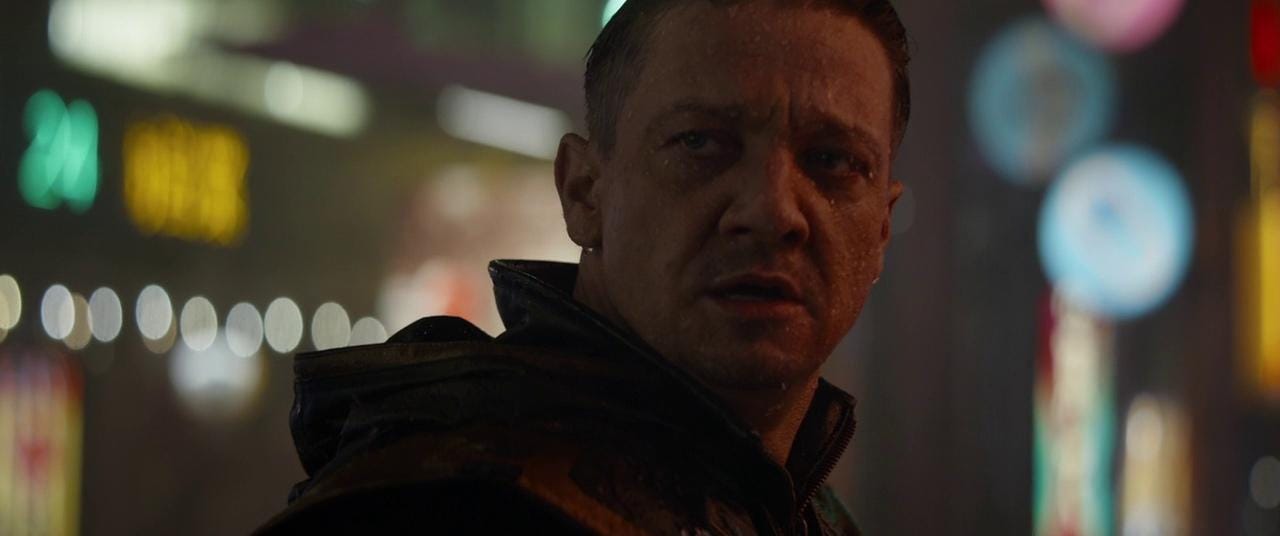
I realize the absurdity of equating the most popcorny of popcorn movies as some sort of symbolic representation of American idealism, but really, is there a better cinematic metaphor for “look how good we had it?”
In retrospect it was a death rattle, but at the time, Endgame felt like we had summited pop culture Everest: the culmination of 12 years of cinematic world-building, combining dozens of obscure comic book characters into a satisfying narrative that gripped the cultural conversation that somehow defied the internet’s propensity to fragment. Even your Facebook Aunt knew who Starlord was. That’s insane.
More to the point, I think it’s a legitimately good movie…
I take umbrage with cinephiles who turn their nose up at Endgame. Yes, it’s populist entertainment, but it’s very, very good populist entertainment.
Let me take a step back for just a second…
Now that they have reached a somewhat appropriate age (12 and 8), I have begun rewatching all of the MCU movies with my kids.
Revisiting the MCU movies (most of which I had essentially forgotten) has been an interesting cultural experiment to say the least. Some are better than I remember (Iron Man largely holds up). Some are worse (Captain Marvel is an objectively bad movie). The filmmaking ranges from “good” to “competent” to “bad.” Still, though, for all their flaws (and, yes, they are plentiful), it’s somewhat amazing what Marvel and Disney pulled off here, flying by the seat of their pants to create an hours long serialized cinematic soap opera that ended up being the most profitable franchise in Hollywood history. The MCU completely revitalized Robert Downey Jr.’s career and changed his legacy. It was the engine that launched Ryan Coogler into his rightful place in the blockbuster stratosphere. There is no Sinners without Black Panther.
I won’t make excuses for all the MCU’s glaring problems: with exceptions (Coogler’s entries included), visually, they are about as interesting as white construction-grade primer. They are essentially responsible for killing “mid budget” cinema. They feature weightless CGI and are over reliant on green screen sets. They are largely sexless and weirdly fetishistic about the military in a way that seems to ignore the historical context of the wars in both Iraq and Afghanistan. They are tonally flippant and, due to his major involvement early on, too often adhere to a Whedon-esque house style.
But, they are also brilliantly cast and, despite their simplicity, morally decent. Chris Evans’s Captain America represents an American idealism that, while not challenging, at least is aligned to a proper moral compass. Now that we are in Trump II—an administration that gleefully bombs hospitals and kills school children—it’s quaint, but back in 2019, if you squinted and didn’t think too hard about it, America, as a concept, still seemed to represent something good, or at the very least, was aspirationally good.
In our family watch/rewatch of the Marvel movies, when we reached Endgame, I was forced to admit that it was a full on cinematic miracle. Not a masterpiece, mind you, but a miracle…
Granted, I know that Endgame is a homogenized corporate product created by a mega-corporation, but think about what was accomplished: a three-hour long popcorn epic that manages to mesh together a dozen different franchises into a cohesive, satisfying whole. It’s a film that joyfully references the films that came before it (literally revisiting them via the film’s plot a la Back to the Future II) without coming off as manipulative or forced. It has full-on character arcs for multiple superheroes. It pays off long-running jokes and plot beats. It’s stocked with fan service moments, yes, but they all feel earned and justified by the story.
Look, it’s embarrassing, but even on rewatch I teared up a bit when Cap finally wielded Thor’s hammer…
Endgame’s story is creative and non-formulaic, defying about a million fanboy theories with each passing plot development. Yeah, we all knew that Marvel wasn’t going to actually kill Spider-man, but I’d argue Thanos’s infamous snap had legitimate and meaningful repercussions to the in-movie universe. Endgame wasn’t a simple CTRL-Z from the events of Infinity War and I have a lot of respect for that.
And, let’s be real: think about what a humongous achievement this film was purely on the logistical production side of things…the sheer number of movie stars from multiple generations that are present in this one picture defies conventional logic. This is Robert Redford’s last on-screen credit for crying out loud!
It’s human nature to not appreciate what you have…to not accept “how good you had it” in the moment.
Endgame feels symbolic of that larger philosophical ideal, especially as a metaphor for America itself. Apologies if that comes off as eye-rolley, but, again, I’m the guy who cried when a comic book character picked up a hammer.
In terms of Hollywood relevance, Endgame was the pinnacle of the MCU, the likes of which I am confident we will never see again, even with an event film like Avengers Doomsday on the horizon this year. Since Endgame’s release, the MCU has largely splintered and cannibalized itself, diverging into TV and diluting their brand with too many characters and storylines to follow. There were bad shows and bad movies. And, despite the occasional success over the past few years, even the most geeky of fanboys can admit that Marvel is struggling to recapture a magic that glows less brightly than it once did. As with all things, when one achieves the pinnacle of success, it’s nearly impossible to follow it up in a meaningful way—the train can’t run forever.
In a larger context, the world feels less magical too. Things have always been cruel, but it feels more acute now…more blatant…more gleeful in its evils. In Hunter S. Thompson terms, the wave has crested, broke, and rolled back.
As the credits appeared during our Endgame rewatch, I felt a strange sense of ennui. The movie still worked on me: I was thrilled, invested, and emotionally moved.
And yet…
I grew nostalgic; not a warm and fuzzy nostalgia, but rather a sort of sad, wistful recollection of a time that once was—a time that I didn’t appreciate enough in the moment, too innocent and ignorant to understand or predict the creeping horrors burrowing underneath the soil.
I don’t know where our family Marvel rewatch goes from here. The MCU movies keep coming, but they get collectively worse. Moreover, they become reminders of a historical and cultural context I don’t wish to relive (Black Widow was famously a delayed COVID release), and I don’t know if I have the mettle to watch in slow motion as the wheels start to come off of the MCU’s tightly constructed machine.
Just think back and remember this…
It seems so pure…
We really did have everything, didn’t we?